The Business of Demand Creation
I was recently asked to explain what I mean when I say, “We are not in the business of demand creation.” I usually go on to say, “We leave that job to big agencies,” who seem on occasion to quite successfully create demand for products regardless of their actual quality. Both the agencies and the companies that pay them seem happy to continue with this symbiotic endeavor. It’s big money and it works for both agency and manufacturer.
What I was being asked was why we don’t do this. The short answer is cost.
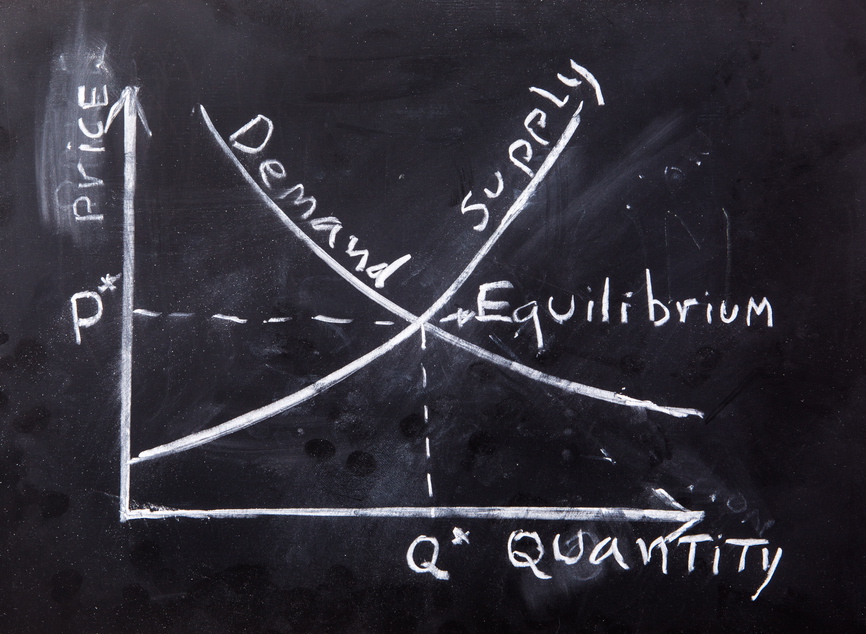
Demand creation seeks to create desire. Branding and marketing, as we understand it, seek instead to satisfy existing needs.
Pull (which is what we do) is so much less expensive than push, and yet the habit of push in the world of marketing and advertising is very strong. Demand creation seeks to create desire. Branding and marketing, as we understand it, seek instead to satisfy existing needs. In demand creation the ultimate quality of the product is often secondary to the power of the marketing effort that pushes it out. In our conception of marketing, the power comes directly from the organization and its products and services. By telling the true story of these things they should almost sell themselves, generating referrals, buzz and PR, not because they are advertised a lot, but because they are truly good, and when people find truly good things they spread the word.
It is no secret that the universal mass media barrage as a method for demand creation and establishing a brand has for the most part gone the way of the advertising jingle. Media channels and markets have become increasingly diverse and only the largest players can push out a message hard enough to make a dent in the collective consciousness. We argue that they should not have to, and that it is much better to get your story straight and tell that story only to the audience that is ready to listen.
If I think about my own media consumption, I have in place habits and technology that act as a pretty effective anti-push defense shield. If I don’t seek it out, very little gets the opportunity to occupy even the narrowest slice in my awareness. By comparison, when I need something and I do go looking, I am invariably exposed to brands that present their case. What the brand tells me about the organization or its products or services becomes an important factor in my decision. I may not take the brand message at face value though, and I know I am not alone in this. It matters a great deal what I feel about that brand at the outset, but I also will often seek third party verification of the brand message. With this slight extra effort, the veil of push marketing and brand communications is easy to lift. If what a brand is saying about itself is not really true, I will know this in short order.
If what a brand is saying about itself is not really true, I will know this in short order.
A prospect, now a client, was surprised when I said in our first meeting that we will not take on a crappy product or service. This fact is fundamental to our contention that a brand, in order to be powerful, must be true. Its power resides not only in its expression, but in the actual quality of the delivered product or service. It’s not simply the power of the marketing that drives sales, at least not in the long run. The quality and value of the product itself is inevitably of great if not primary importance.
For us, the paramount objective is to make the messaging and communications (the marketing) match the lived experience of the brand. This is A LOT easier than what big agencies are sometimes asked to do with a product.
Our job is usually one of research, insight and then repair. We repair the broken links between what is offered and how this is communicated and perceived in the mind of the brand consumer. We do this building on our own insights, those gained from the sales and management personnel of the organization itself, and field research if necessary. This makes our work very analytical, almost psychoanalytical. While products need to meet the needs of the marketplace, the vision and mission of an organization cannot operate this way. I do not believe it is productive to try and tailor an organizational personality to match conditions of outside demand. This is OK at the product level, but never at the organizational brand level.
The product of consumer or market-driven branding rather than truth-driven branding is exaggeration and half-truths.
So we never tell an organization, “you have to become this thing (that you are not), because this is what the market dictates.” If the ad agencies who facilitate the creation of brands and advertising also had the power to resolve matters of organizational essence this would be ok, but they generally do not. So the product of consumer or market-driven branding rather than truth-driven branding is exaggeration and half-truths. Products or services can and should be modified to meet demand. Brands should never be modified to meet demand unless the company is truly able to make the changes in itself such that the new and improved brand can also be true.
When BP decided to go “beyond petroleum” they needed to do a lot more than change their logo. They needed to fundamentally change the nature of their organization. Not surprisingly this never happened and, as I have written, this led to a branding disaster when the true organizational self spilled out into the public consciousness in the form of raw petroleum in the Gulf of Mexico. In Q2 2010 BP reported a 17.1 billion dollar loss.
We hold that you have to be what you say you are in fundamental and meaningful ways, and that a brand must derive from this. If this is done and your service or products are of the quality you espouse in your marketing, the circle will be complete. The referral will lead to the sale. The pitch will be convincing to those who actually need and would appreciate what you do. Client/consumer and employee loyalty will be fostered.
This is what we mean by branding and why we are not in the business of demand creation.
___
Image courtesy of Shutterstock