


Museum Marketing and Advertising: Practical Tips First
- Clarify your institutional promise in one sentence. This is harder than it seems but doing so will make it much easier for the prospective visitor to see you and be interested.
- Align every major exhibition campaign with your mission. If you cannot do this or it feels like acrobatics, raise the red flag. That exhibition is out of alignment.
- Treat your team as your first audience. They are your brand ambassadors and they need to be happy and on board.
- Use visitor feedback to shape—not just report—strategy. Visitors are the center, not the periphery.
- Build audience personas based on actual data. Marketing must concern itself with visitor understanding.
- Humanize your exhibitions. Exhibitions are first and foremost for visitors, not for other professionals.
- Conduct an internal brand audit every 18 months. This will alert you to the slippage that happens when those inside the organization begin to get bored with the brand. This happens way to early.
- Prioritize accessibility broadly defined.
- Cultivate two-way social media engagement.
- Train team members across functional units in brand-aligned behavior and communication.
- Let your Core Values show up not just in design and tone, but in daily behavior.
- Avoid over-relying on one-off or seasonal promotions. Consistency is the most helpful builder of your brand.
- Create content that educates and inspires. Give rather than ask except on the rarest of occasions.
- Instagram works, but there is value in continuous experimentation with an array of other marketing channels and marketing experiments.
- Pay close attention to all signage. On-site signage an near site is a key tactical human-level interface for the visitor. Take the time to get it right.
Measure what matters: trust, engagement, impact. This is hard, but you have to keep trying. - Encourage cross-functional collaboration on everything.
Invest in audience research. It too easy to rely on assumptions. - Let your community co-author your story when possible.
- Acknowledge mistakes publicly and repair damage with humility and authentically.
- AI is here to stay. Use it thoughtfully and in the context of a rigorous code of ethics.
- Remember that every action is marketing. All of it contributes to your brand reputation.
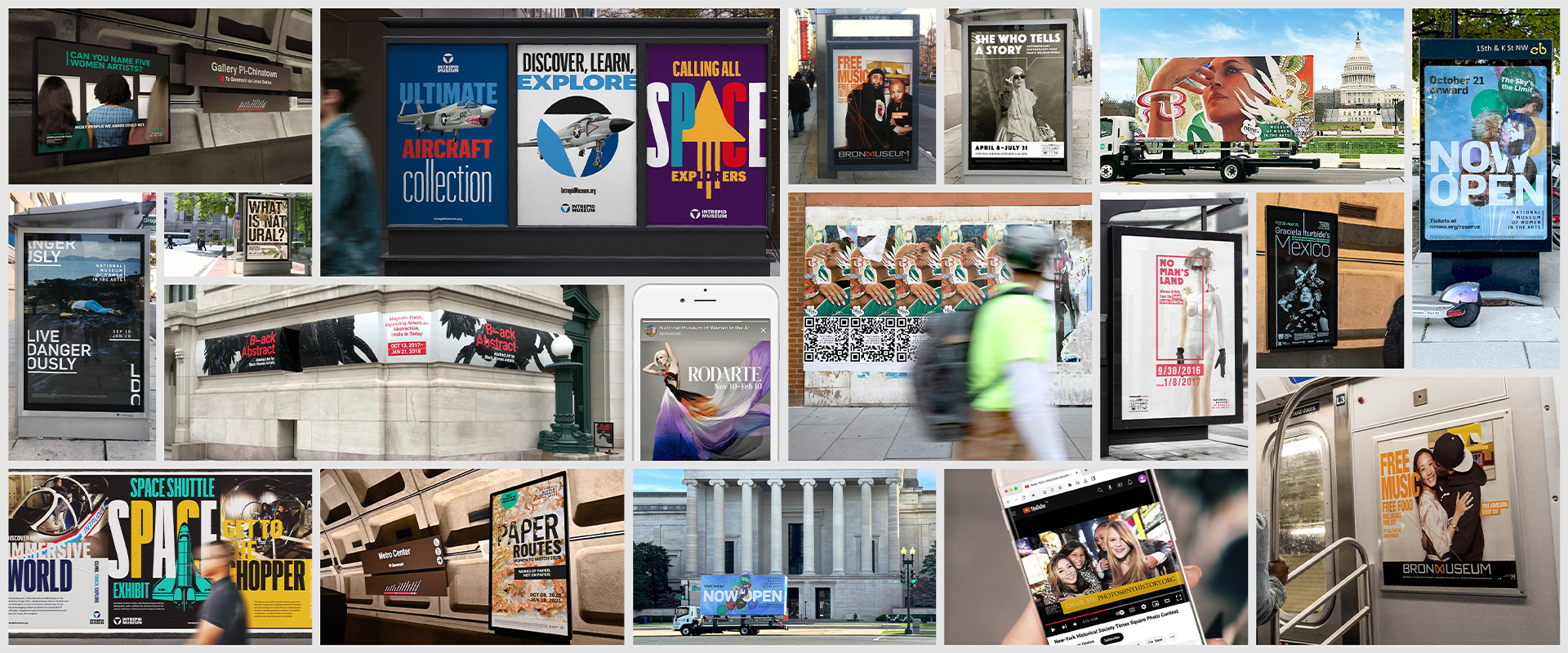
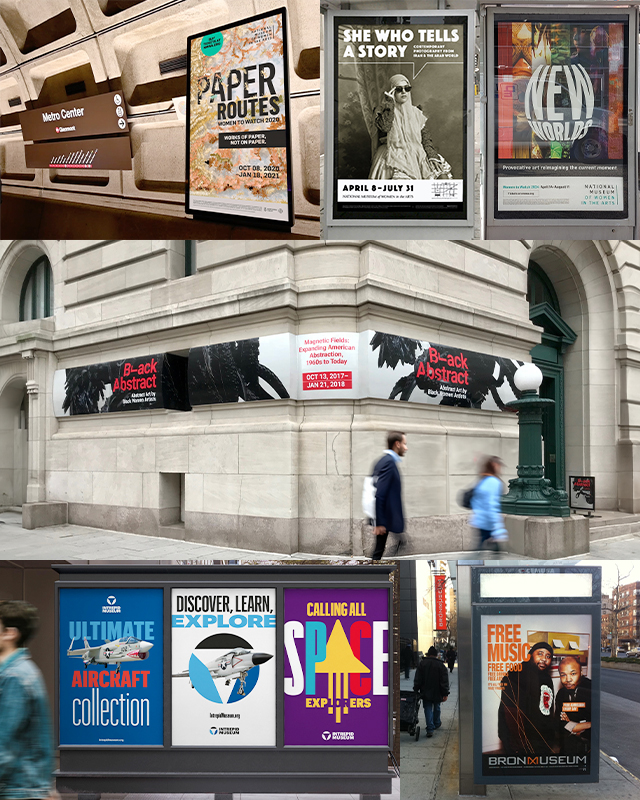

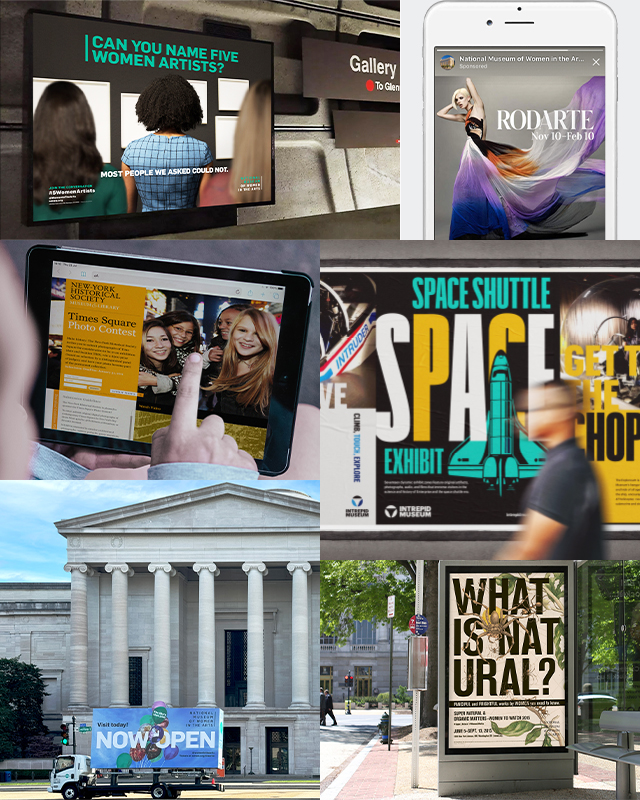
DCW
With offices in Manhattan, Long Island, and Denver, DCW Media has worked for 50 years on the front lines of emerging media. The largest privately held media buying company on the East Coast, DCW has for over ten years given Tronvig access to deep-seated using power and media spending of more than $100M annually. DCW works closely with us on media strategy and media buying so our clients get the benefits of being big when you need it to negotiate and buy media.
Tronvig
As a boutique agency, we have nearly 30 years of brand strategy and advertising experience and an extensive network of creatives. This enables us to deliver world-class creative work economically. We can comfortably create and manage campaigns from one to ten million in annual spend.
Museums at the Crossroads
We are living in a moment where museums—often thought of as the most stable cultural institutions—are facing tectonic shifts. Financial precarity, political scrutiny, rapidly evolving audience expectations, and a media environment that’s become louder and more fragmented than ever have forced museums to reexamine not only how they present themselves, but what they actually are.
Museums are no longer just repositories of culture. They are stages for meaning-making. And the work of marketing them is not about selling—it’s about clarifying, aligning, and communicating that meaning effectively.
Museum marketing must evolve into a strategic discipline of reputation stewardship, internal alignment, and behavioral integrity—grounded in purpose, executed with care, and attuned to the post-digital audience.
Museum Marketing as Meaning-Making
At Tronvig, we hold that marketing is not a department; it is an act of strategic clarity. The traditional model of marketing—driven by promotion, special exhibition campaigns, and audience acquisition—fails when the underlying brand is incoherent, performative, or out of sync with its audience.
Museums must instead become expert meaning-makers. This begins with asking: What do we mean to our audience? And how do we know?
If you cannot answer that with clarity and confidence, no marketing or advertising campaign will save you.
The Shift from Promotion to Alignment
The most effective marketing today is not promotional—it’s aligned.
This means that the museum’s external messaging, internal culture, visitor experience, programming, and community partnerships are all pulling in the same direction. Alignment builds trust. Misalignment creates friction and distrust.
Museums that succeed in this climate are those who market not just to attract—but to affirm and deepen relationships.
Museum Audiences in the Post-Digital Age
In this second quarter of the 21st Century, we are no longer in a digital transition—we are in a post-digital world. Audiences do not separate the physical from the digital. For them, these are not dual channels—they are interwoven and connected experiences.
This changes nearly everything:
- Digital presence is not an add-on—it is the front door.
- Authenticity is no longer optional.
- Audiences expect interaction, not broadcast.
- Marketing must be continuous, human, and porous.
The museum must now be a conversation, not a monologue.
Brand as Behavior: Why Reputation is Everything for Museums
Your brand is not your logo. Your brand is what people think and feel about you. And that brand is built through your behavior.
What your museum does—how it responds to feedback, how it treats its internal team members, how it shows up in times of crisis—is the brand. Marketing and advertising is the narration of that behavior, not its substitute.
A positive reputation is not created in marketing campaigns. It is earned in the day-to-day choices of the institution and everyone in it.
The Internal Brand: Mission, Team, and Organizational Culture
Marketing cannot work if it is disconnected from the internal reality of the organization.
If your staff is burned out, underpaid, or cynical, that is the brand. If your mission is aspirational but your behavior is colonial, that is the brand. Marketing cannot conceal what the institution actually is.
Internal alignment—through clear mission, staff empowerment, and healthy culture—is foundational. Not peripheral.
Community-Centered Communication
Museums do not have audiences—they have communities.
Marketing must shift from transactional to relational. That means:
- Listening before messaging
- Co-creating content and exhibitions
- Designing communications as ongoing dialogue, not announcements
Marketing becomes a form of cultural stewardship, not just attendance generation.
Navigating Digital Saturation
We are all overwhelmed by content. In this environment, attention is sacred and fleeting.
Museums must:
- Create fewer, better campaigns
- Prioritize emotional resonance over informational density
- Embrace brevity, clarity, and story
You are not competing with other museums. You are competing with Netflix, Instagram, and the infinite scroll.
Metrics and Meaning: What to Measure Now
Success in museum marketing must be measured differently in this new era. Instead of obsessing over impressions and clicks, we must track:
- Engagement quality: Are people staying, interacting, returning?
- Trust indicators: Sentiment analysis, community perception
- Behavioral shifts: Are we deepening relationships, not just acquiring names?
- Alignment metrics: Is what we say matching what we do?
Data without interpretation is noise. Measurement must serve mission.
Building Resilience Through Reputation
Reputation is a long game. It is the result of consistently living your values, treating people well, and communicating with clarity.
In a crisis, it is your most valuable asset. In uncertainty, it is your competitive edge.
Invest in reputation not through PR, but through institutional coherence and behavioral integrity. Marketing should not sell a fantasy. It should illuminate the truth of what you do—at your best.
Museum Marketing and Advertising
Why do an exhibition strategy when it’s more work?
With each new special exhibition campaign, the core questions should be asked afresh:
What is this exhibition?
What is different about it? How does it stand out from everything else that will be going on at the same time?
Who is the target audience?
What will make this target audience care about this particular exhibition?
How does the exhibition align with our core values and organizational mission?
What is the band idea for this exhibition? What is the one thing powerful enough to reach out and sick in the minds of a generally disinterested or distracted public?
We know from experience that the answers are not the answers until we have satisfied the agreed-to strategic requirements for that particular exhibition, established a strong theory as to how the exhibition connects to a clearly identified audience, and checked our strategy against the organization’s mission and values. This is not the same as making a clever or well-designed advertising campaign—it’s more work—but the results speak for themselves in terms of each exhibition advertising campaigns’ capacity to connect with an audience and foster interest and drive attendance.
FAQs
Museum Exhibition Marketing FAQs
What is museum exhibition marketing?
Museum exhibition marketing is the work of getting the right people genuinely interested in a specific show, not just shouting that it exists. It means promoting exhibitions in a way that speaks to the audiences you want to reach, fits the museum’s mission and values, and encourages real attendance and engagement instead of one-way messaging.
Why is strategic planning important before developing a museum marketing campaign?
Without a plan, campaigns drift. Strategic planning forces the museum to clarify who it is, who it wants to reach, and what success looks like. That way, the creative, the messaging, and the tactics all line up with the institution’s mission and goals, which makes the marketing more coherent and more effective.
How does a museum identify the right audience for an exhibition advertising campaign?
Museums start by breaking the general public into specific audience segments rather than aiming at “everyone.” They define likely groups, test which ones are most responsive, and then support those choices with research, ticket data, and other audience insights whenever possible.
What role does internal alignment play in museum marketing and exhibition advertising?
Internal alignment means staff, culture, mission, and values are all pulling in the same direction. When those pieces are connected, the external brand feels honest and consistent. When they are not, even a well-funded ad campaign can ring false and undercut the museum’s reputation.
How should museums measure the success of their museum marketing efforts?
Clicks and impressions matter, but they are not the whole story. Museums should also look at the depth of engagement, repeat visits, signs of trust and loyalty, community perception, and whether visitor behavior shifts in the way they hoped. Strong marketing should also feel true to the actual museum experience once people walk through the door.
What is the difference between promotional and aligned advertising?
Promotional advertising focuses on quick visibility and short-term attendance spikes. Aligned advertising does that while also reflecting the museum’s mission, culture, visitor experience, and community relationships. The aligned approach is built to grow trust and long-term engagement, not just a single weekend’s turnout.
Why is community-centered communication important in museum marketing?
Community-centered communication treats audiences as partners, not just ticket buyers. It involves listening, co-creating messages or programs, and keeping a conversation going over time. That approach turns marketing into a relationship-building tool and strengthens trust with the people the museum hopes to serve.
What common mistakes should museums avoid in museum marketing?
Common pitfalls include fuzzy or scattered messaging, relying on generic “come see our exhibit” ads, rolling out campaigns with no clear strategy, and projecting one story outward while the internal culture tells another. A further mistake is not clearly explaining why a specific exhibition matters most to the people it is meant to reach.
How can measuring audience feedback improve museum marketing?
Audience feedback makes it clear what connected and what fell flat. It can uncover gaps between the promise of the campaign and the actual visit, spotlight language or themes that resonate, and surface new ideas. Folding that input into future planning strengthens both strategy and day to day execution.
What practical first steps should museums take when planning exhibition advertising?
Practical first steps include writing a one sentence simple line about the museum’s core promise, building audience personas from real data, checking that the campaign matches mission and values, getting buy-in from internal teams, and planning for ongoing two way engagement instead of a one time push.
Advertising & Marketing Culture Museums News
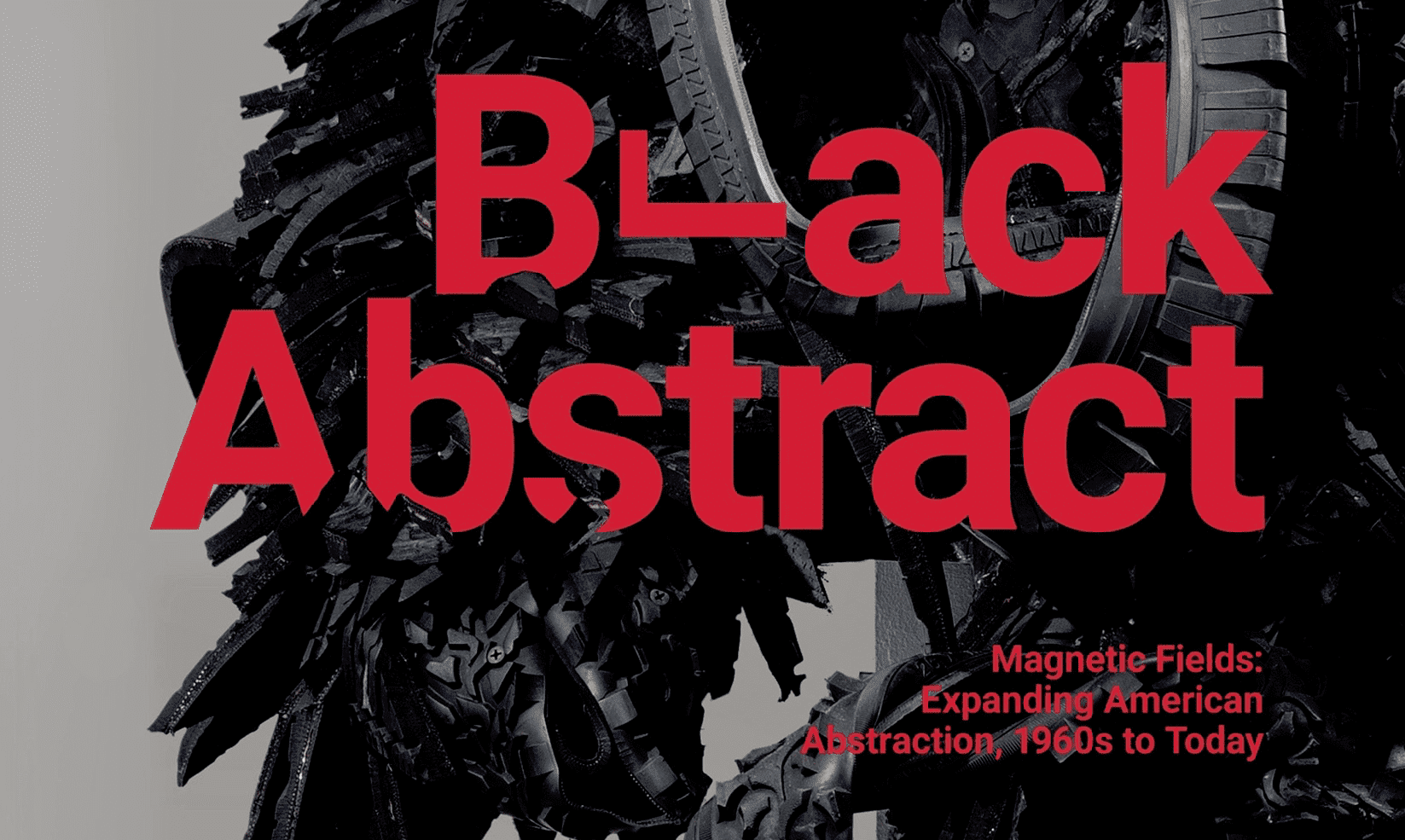
Black Abstract: Strategy Before Design
Core to Tronvig philosophy—whether refreshing a visual identity or promoting an art exhibition—is our insistence that strategy must come before design.
READ MORE
Advertising & Marketing Culture Museums News Nonprofits
Museum Exhibition Advertising: Leading with Strategy
Along with our client, the National Museum of Women in the Arts, we're proud to have won a first prize in AAM's 2016 Museum Publications Design Competition.
READ MORE
Advertising & Marketing Culture Museums News
Lookout: MISS CHELOVE at the National Museum of Women in the Arts
In support of the four-story mural, we used out-of-home channels to show that NMWA is very much active and engaged despite the temporary closure of the building.
READ MOREMuseum Marketing
It’s about what you do, why you do it, and how you do it differently from others. In other words, your brand has to be built on organizational strategy. The people on the inside – employees, donors, and other stakeholders – are just as important as customers, visitors, or prospects.